
Film and audio
Zarina in her own voice
Studio visits, conversations, museum films, and lectures illuminate Zarina’s thinking in the presence of her voice and work.
“Yes, the border is not on the land, it is drawn on ones heart. Unfortunately around the world there are many walls and barriers where families meet on opposite sides. Now that I have lived almost fifty years away from the place I called home, I have accepted the identity of an exile, and I feel closer to the community of people who live across barbed wires, barriers and checkpoints.”Zarina
Seven films and talks
Watch and listen
Zarina’s own words are the clearest point of entry. The films that follow preserve conversations in her studio, in museum galleries, and before audiences.
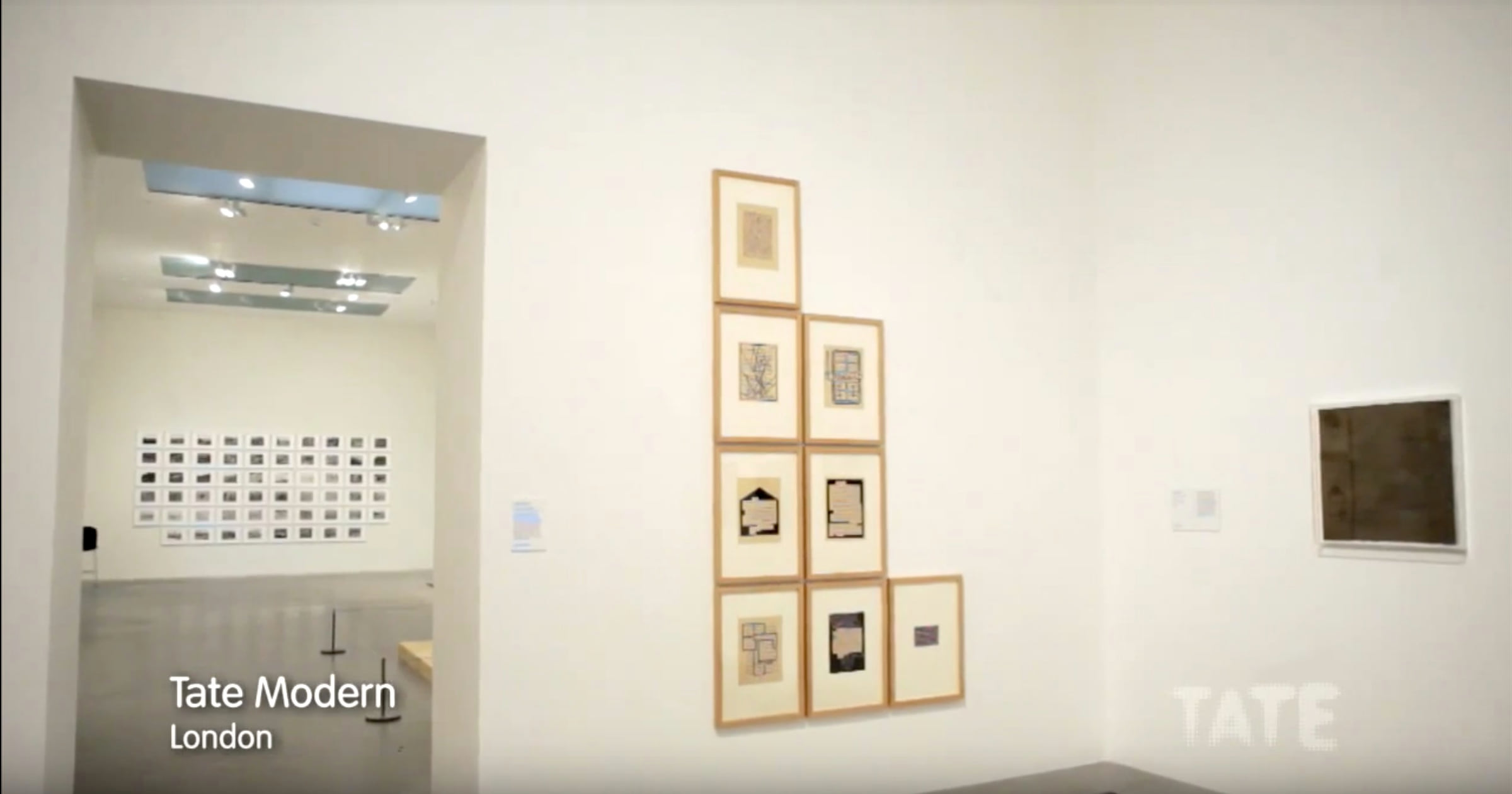
Zarina Hashmi Studio Visit
In her New York studio, Zarina reflects on a life mapped through art and on the ways exile, language, and loss enter the work.
Watch film ↗︎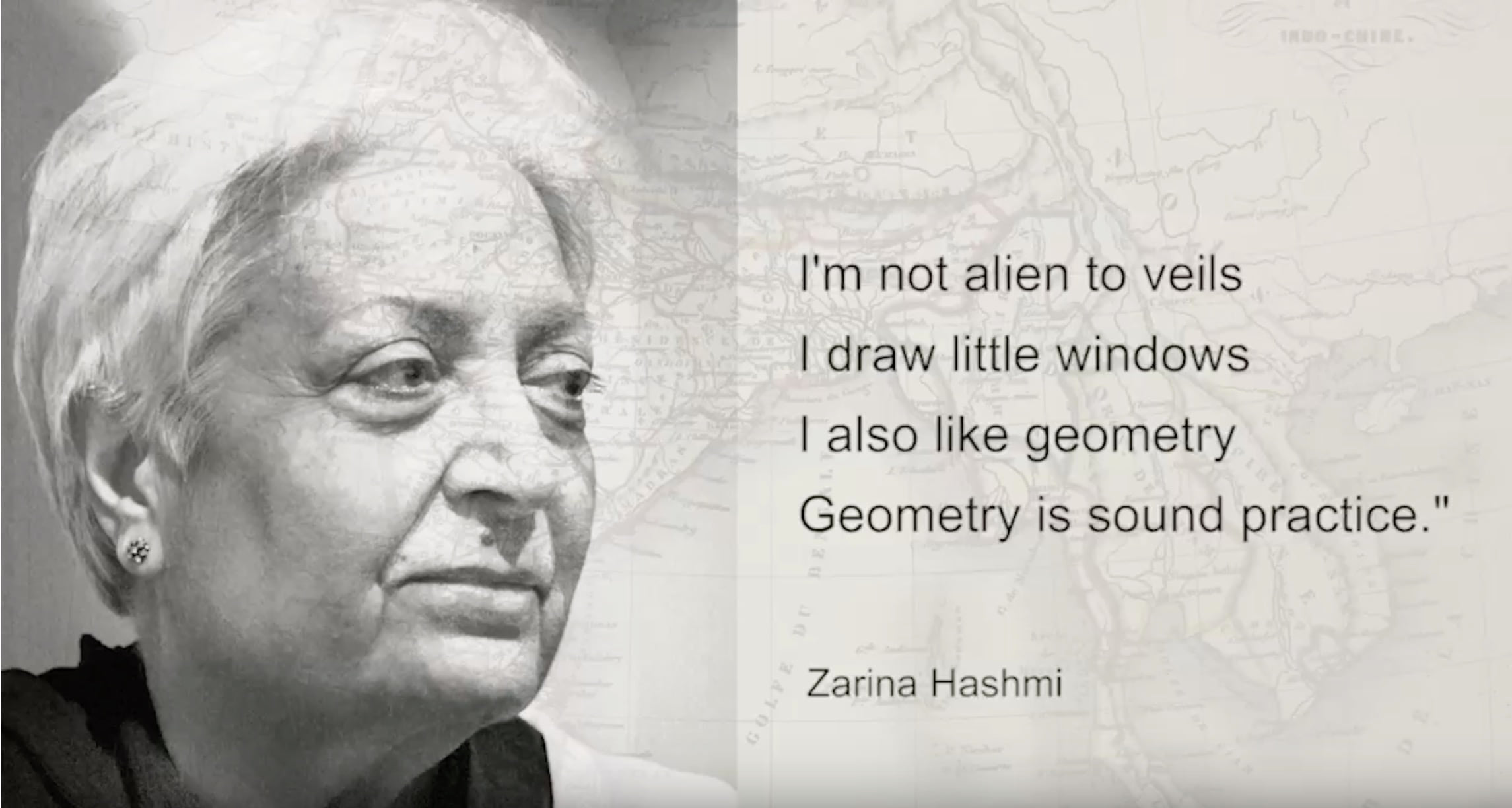
Paper Like Skin
A concise introduction to Zarina’s use of paper, wood, and metal—and to a practice that moved between abstraction, memory, and cultural history.
Watch film ↗︎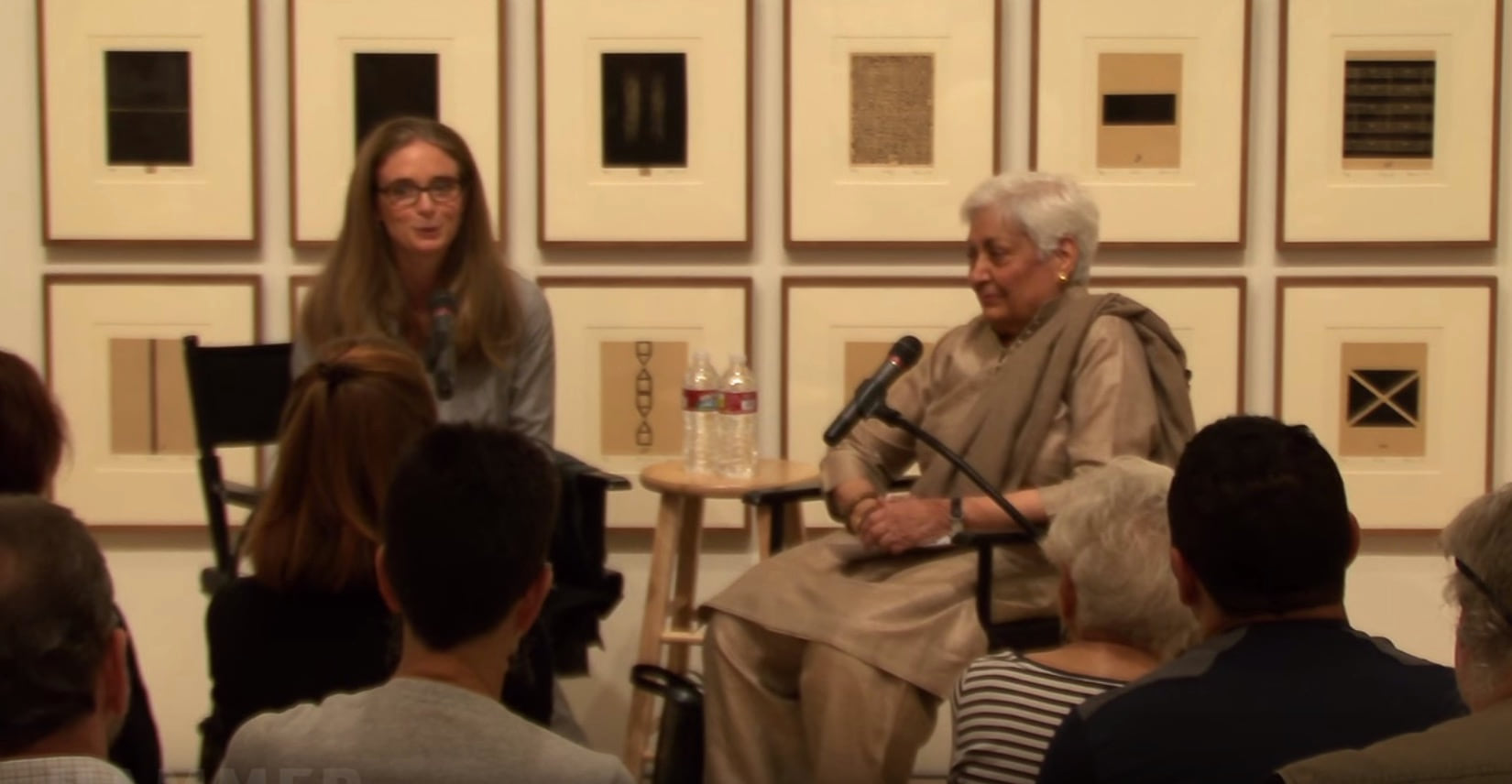
A Conversation with Zarina
Zarina and curator Allegra Pesenti speak together in the galleries of the retrospective Zarina: Paper Like Skin.
Watch film ↗︎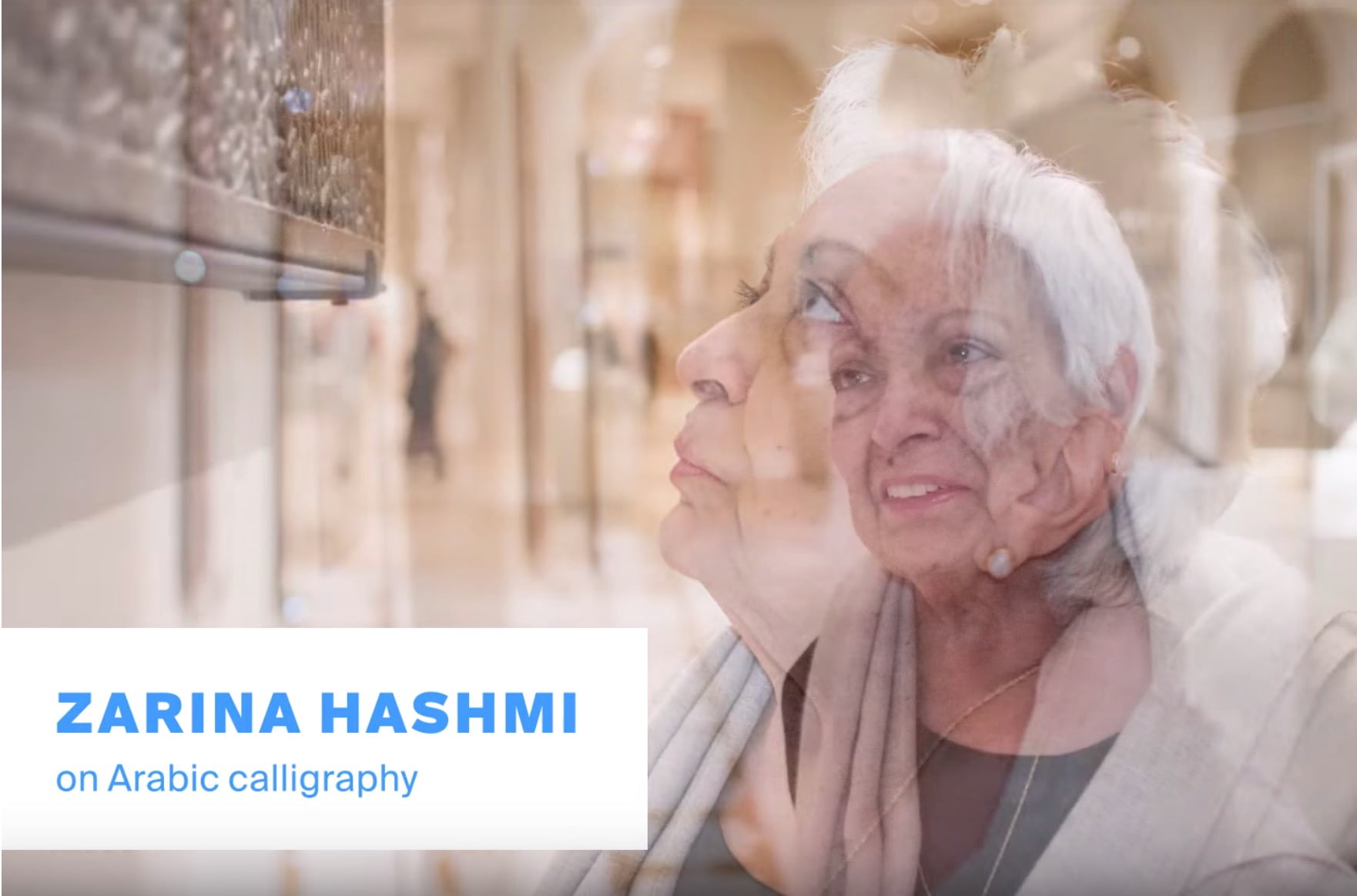
The Artist Project: Zarina Hashmi
Looking closely at works in the Met collection, Zarina considers separation from language and the forms through which loss is carried.
Watch film ↗︎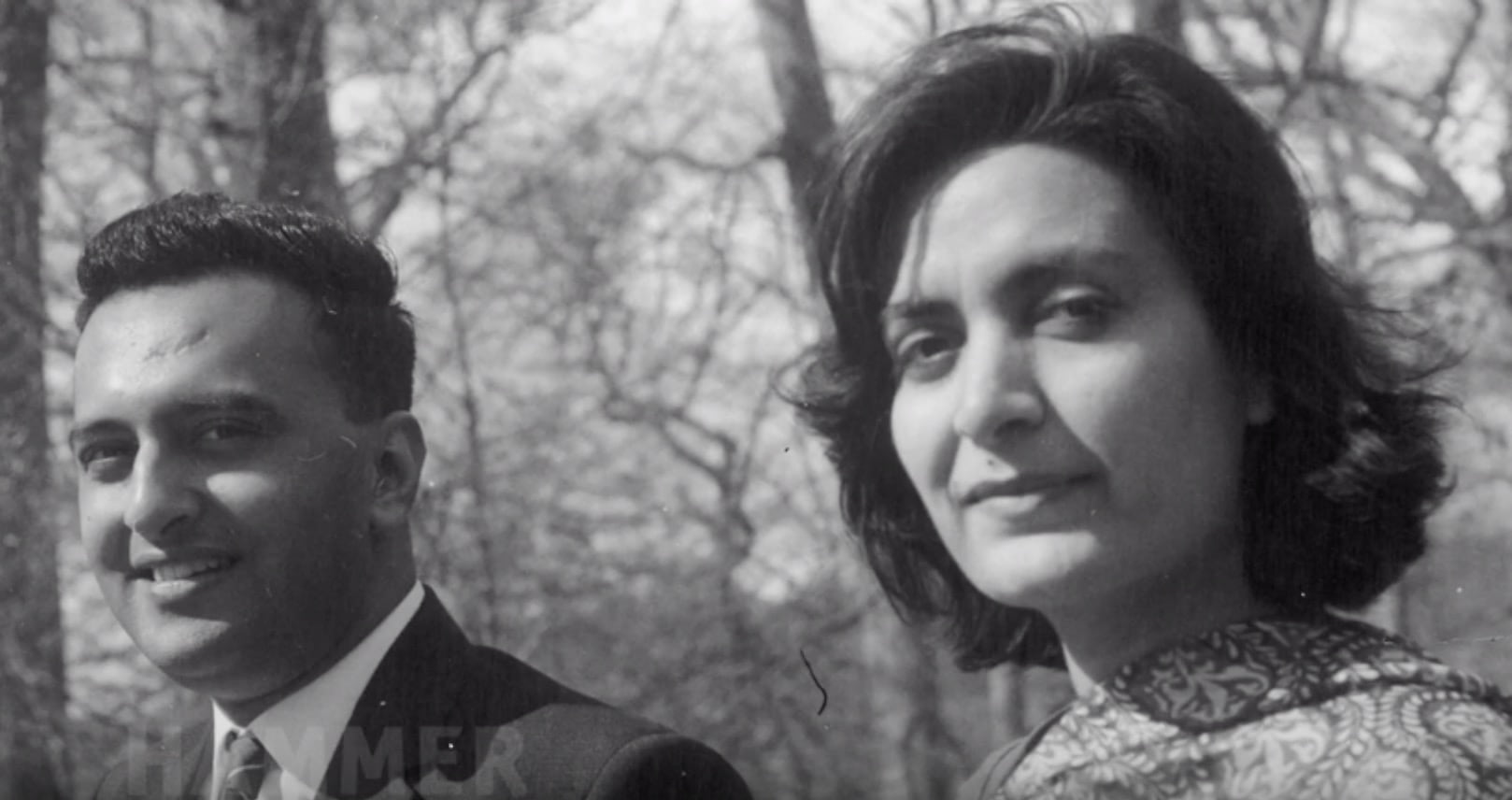
Zarina: Paper Like Skin
An introduction to the first retrospective of Zarina’s work, bringing together five decades of prints, sculpture, and works on paper.
Watch film ↗︎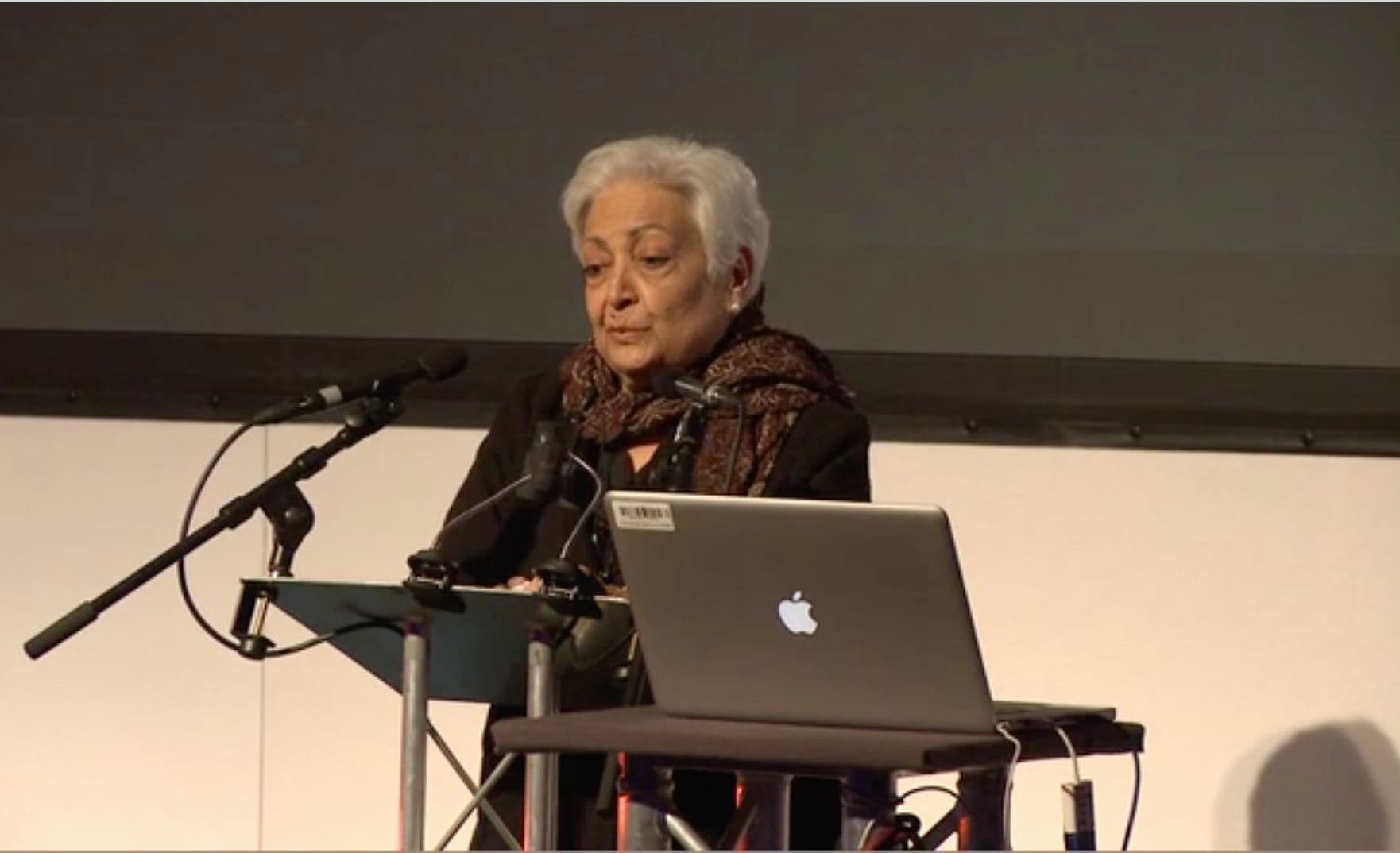
Invisible Gardens
Zarina’s contribution to the Serpentine Gallery Garden Marathon explores the garden as a place imagined, remembered, and remade.
Watch film ↗︎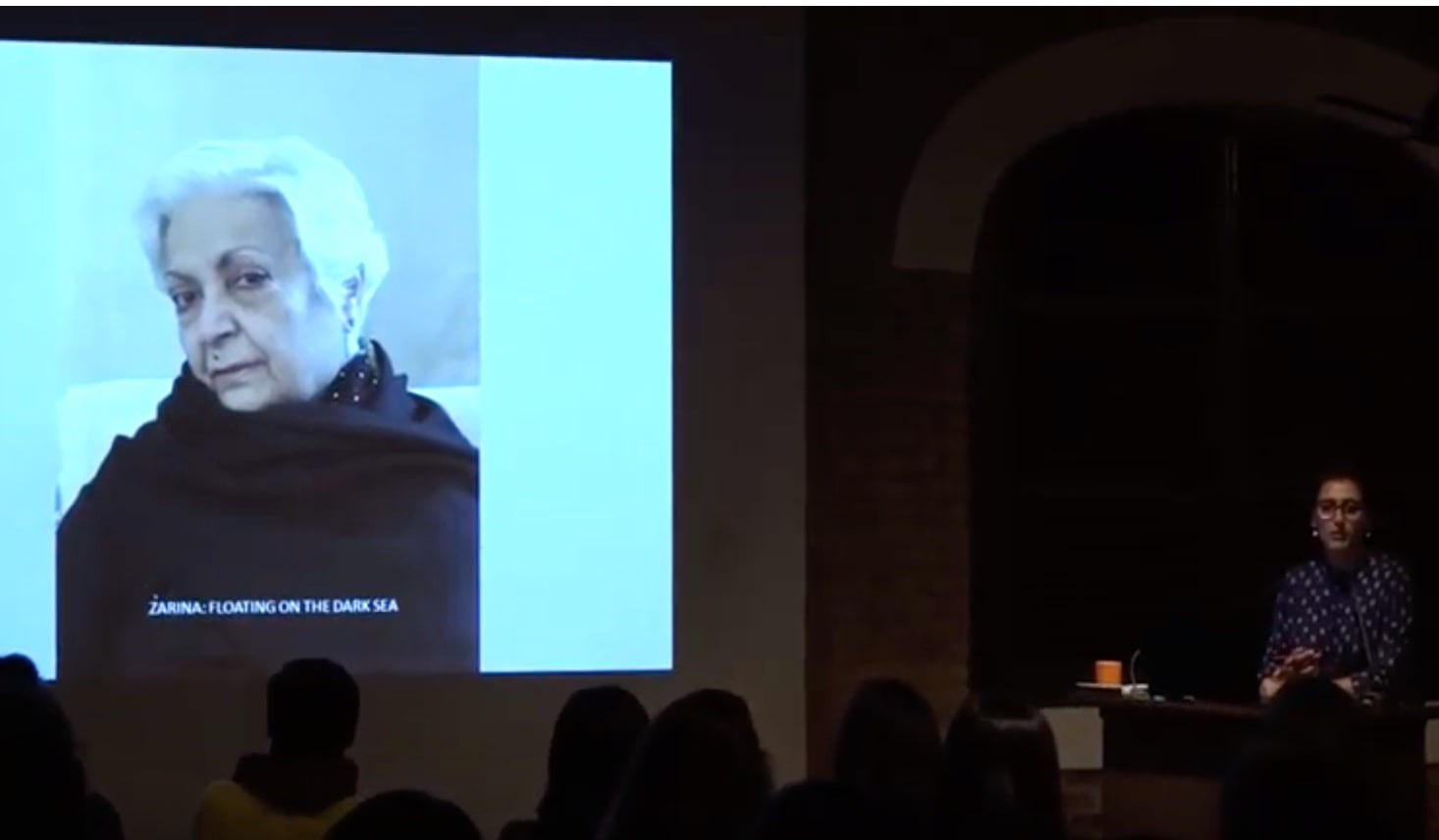
Zarina: Floating on the Dark Sea
A five-part lecture tracing Zarina’s work from the early 1960s through 2015. Continue to the complete sequence below.
Explore all five parts ↓Five-part lecture · watch in order
Floating on the Dark Sea
Sandhini Poddar follows Zarina’s practice across more than five decades, moving from the formation of her visual language through paper, place, maps, borders, exile, and the late work.
Presented by Jnanapravaha Mumbai
Begin with Part 1 ↗︎- 01Part 1 of 5 · Begin hereOpening: early works and the formation of a languageWatch Part 1 ↗︎
- 02Part 2 of 5 · ContinuePaper, place, and the architecture of memoryWatch Part 2 ↗︎
- 03Part 3 of 5 · ContinueMaps, borders, displacement, and homeWatch Part 3 ↗︎
- 04Part 4 of 5 · ContinueLanguage, distance, and the experience of exileWatch Part 4 ↗︎
- 05Part 5 of 5 · ConcludeLater work and closing reflectionsWatch Part 5 ↗︎
More voices