Zarina’s biography and art are inseparable: travel, Partition, language, exile, and remembered architecture gave the work its grammar.
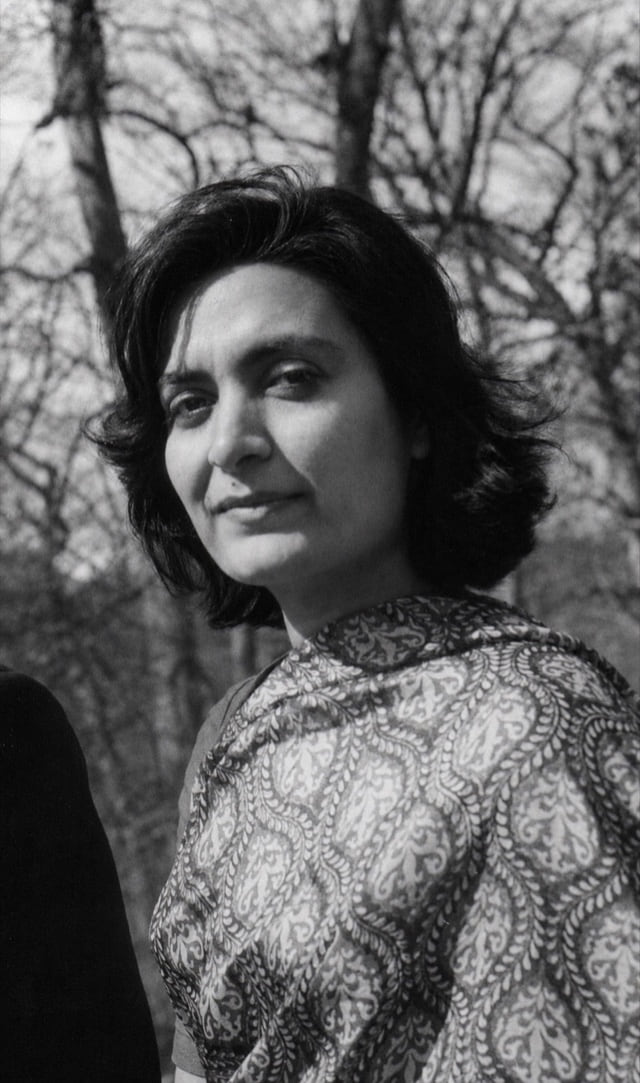
Portrait of Zarina
Artist · printmaker · sculptor
Experience became form
Born in Aligarh in 1937, Zarina studied mathematics before learning woodcut in Bangkok, intaglio at Atelier 17 in Paris, and Japanese woodblock techniques in Tokyo.
Architecture and mathematics remained visible in her restrained geometries. Yet the apparent austerity of the work is softened by handmade paper, incised surfaces, gold leaf, thread, and the pressure of the carved line.
Her own life supplied the recurring subjects—home, displacement, borders, journeys, Urdu, memory, and the night sky. The result is both deeply personal and open enough to hold the experiences of others.
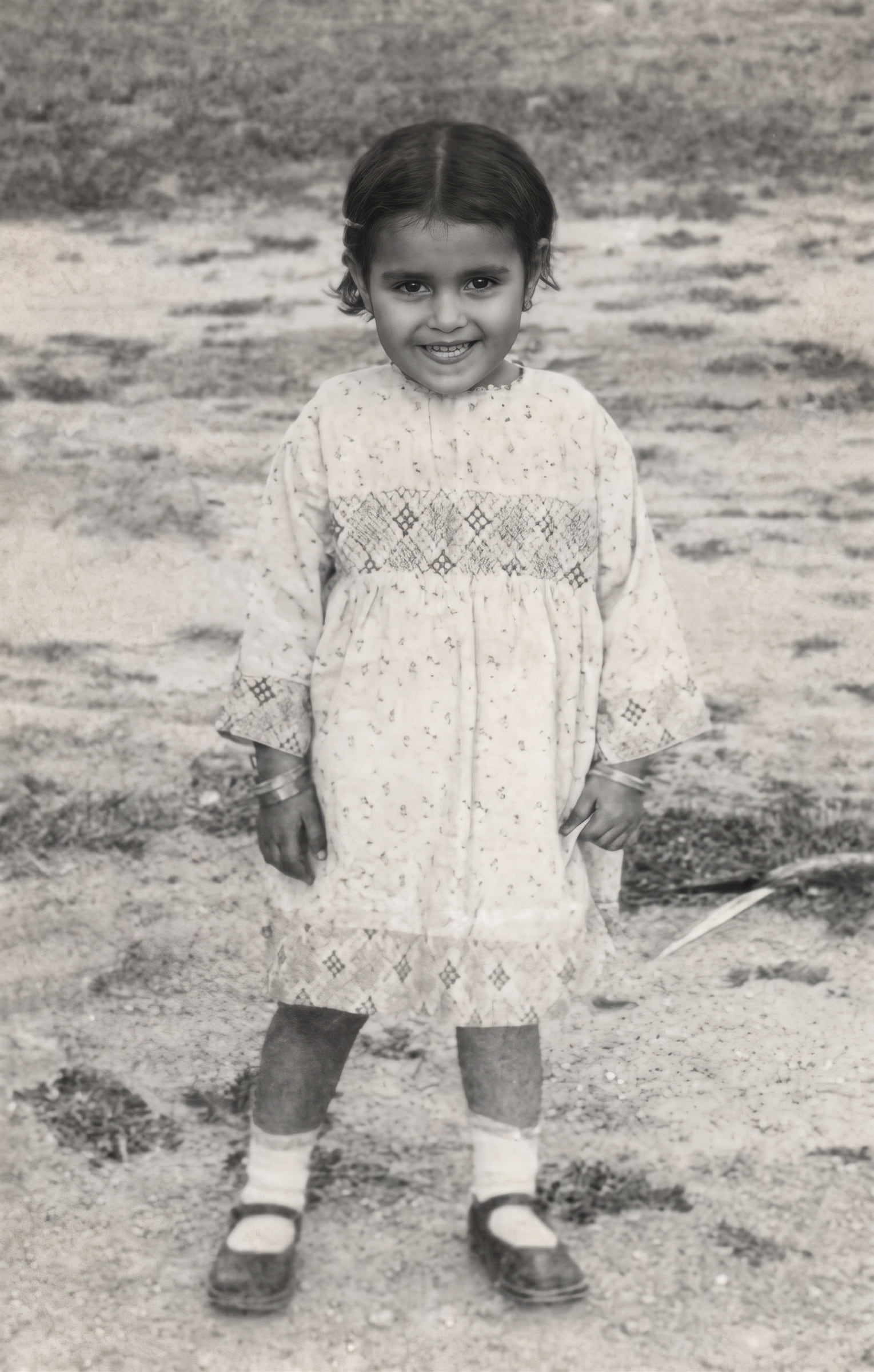
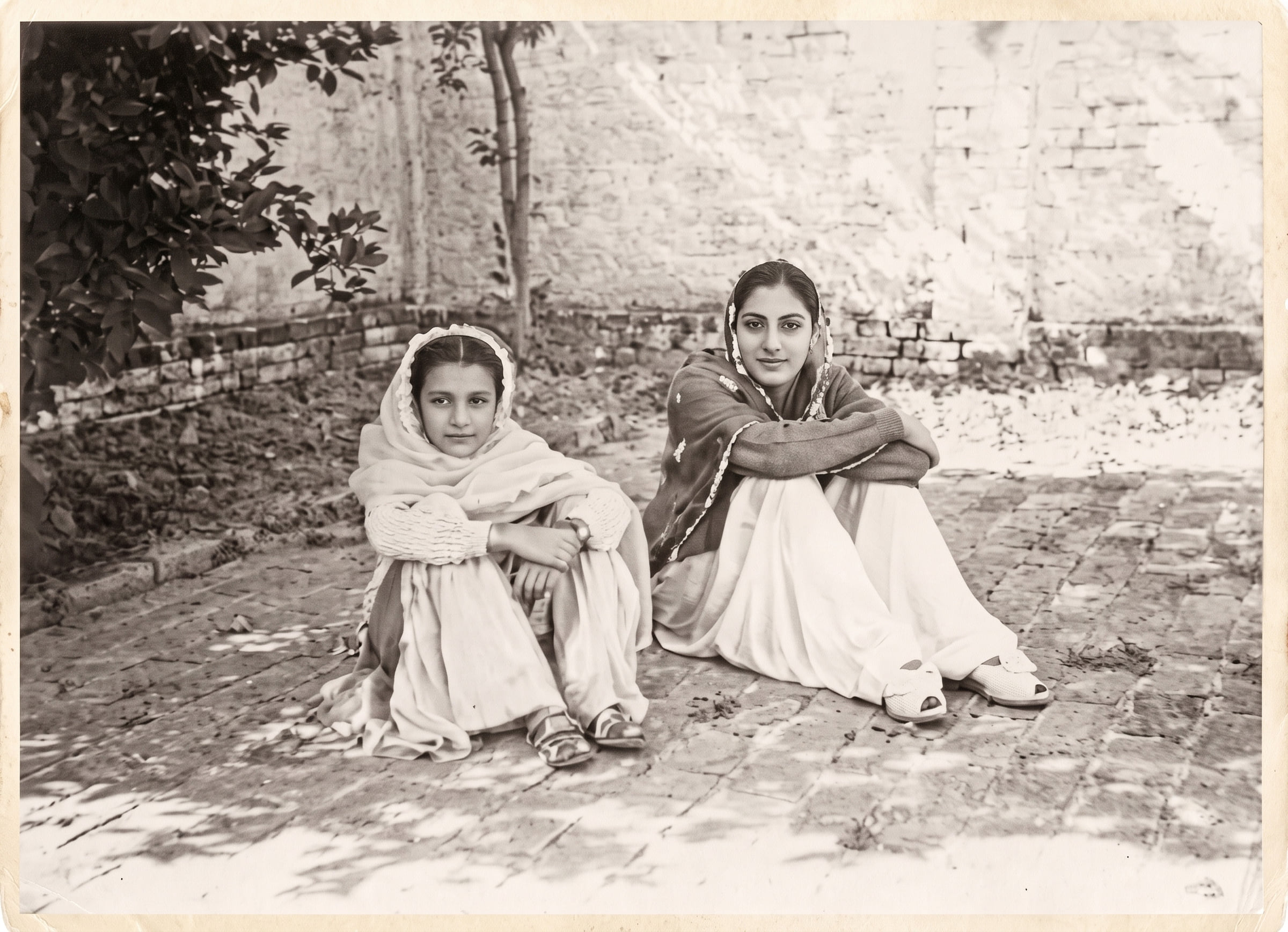
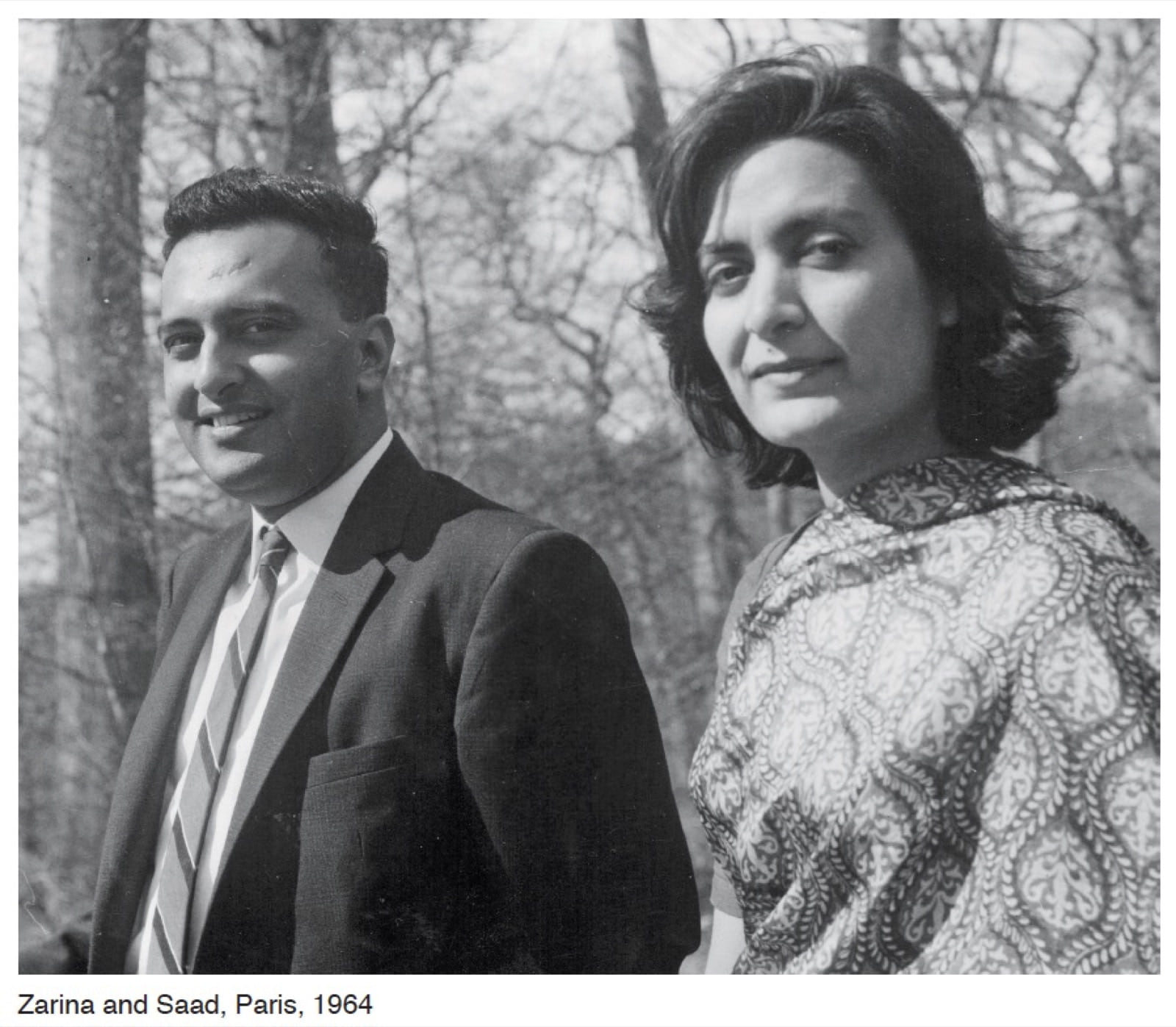
Zarina as a child · Aligarh · date unknownZarina, left, and Rani · Aligarh, 1948Zarina and Saad Hashmi · Paris, 1964
Life into practice
How experience became method
The work grew through travel, technical study, political history, and the daily discipline of the studio.
01
Mathematics and architecture
Her training in mathematics remained present in proportion, grids, measured intervals, and the economy of the diagram. Architecture gave those abstractions an emotional scale: the plan could become a remembered room, a boundary, or a shelter.
02
Printmaking across cities
Bangkok introduced woodcut; Atelier 17 in Paris expanded her knowledge of intaglio; Tokyo deepened her engagement with Japanese woodblock and paper. Zarina absorbed each tradition without allowing technique to become display.
03
Paper as material
Paper was never a passive ground. She printed, cast, punctured, folded, laminated, scratched, stitched, and gilded it, attending to its fibers and edges as closely as to the image placed upon it.
04
An independent New York life
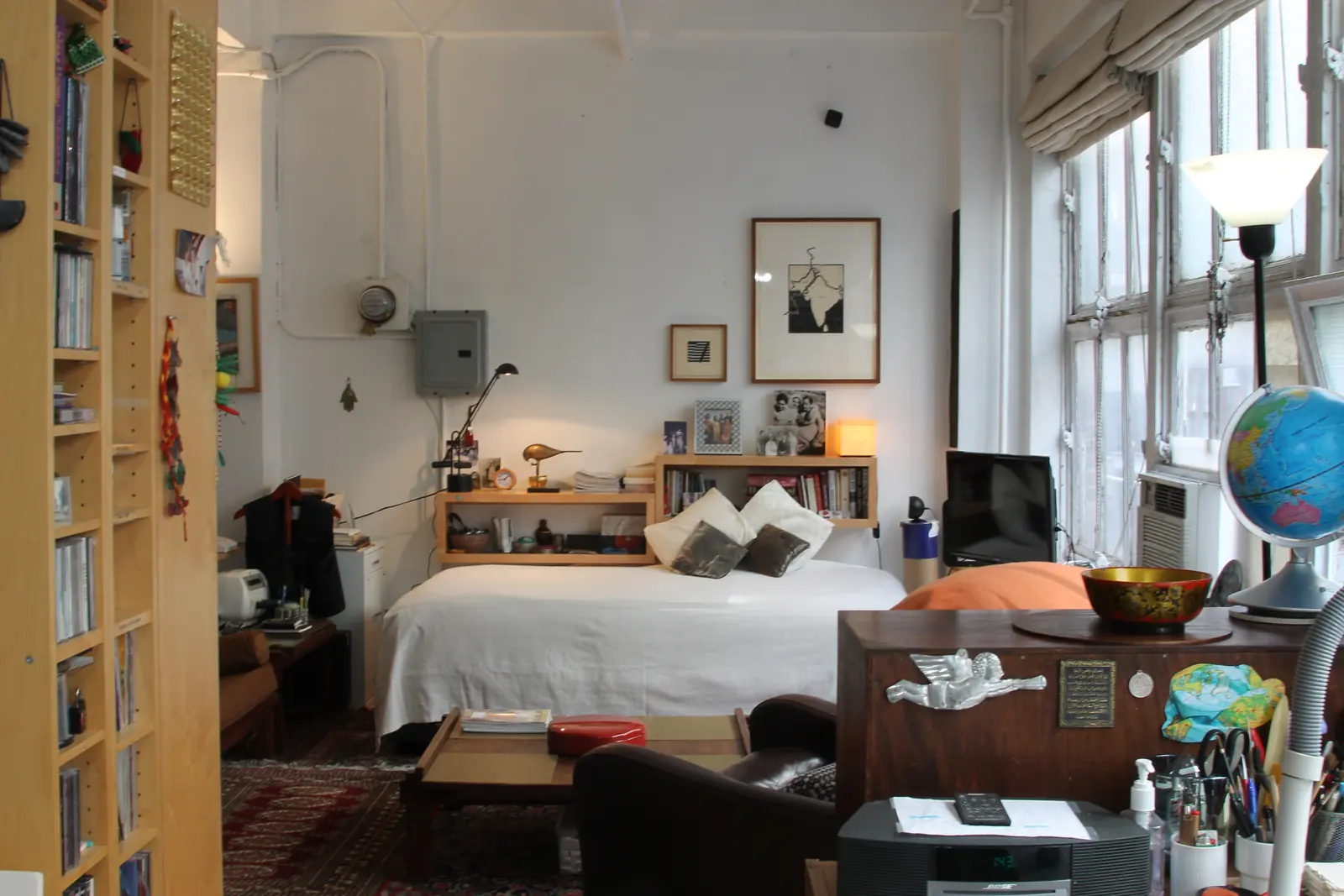
From 1976, her New York loft served as home, workshop, gathering place, and intellectual base. Her participation in feminist and artist-run communities developed alongside an insistence on making a life on her own terms.
Chronology
Places, work, and turning points
A chronology connecting the places Zarina lived with the work she made.
Aligarh
Born on 16 July in Aligarh, where her father taught history at Aligarh Muslim University. The family bungalow, its garden, and its floor plan became lasting images.
Partition
During Partition, Zarina left Aligarh with her mother and sister Rani, travelling by guarded truck to a refugee barrack in Delhi and then to Karachi; her father and brother remained in Aligarh. After Gandhi’s assassination, her father came to Karachi and brought the family home through Sargodha and on to Aligarh. The border remained a central presence in her work.
Bangkok
After marrying Saad Hashmi, she moved to Bangkok and began learning woodcut printing from a Thai artist.
New Delhi
Returned to Delhi, continuing to make art while preparing for a more sustained engagement with printmaking.
Paris
Lived in Paris; from 1964, studied etching and viscosity printing at Stanley William Hayter’s Atelier 17 and found an international printmaking community.
New Delhi
Maintained what she described as a room of her own; in 1969 she received India’s President’s Award for Printmaking.
Bonn
A period she later described in Homes I Made as an uncertain time.
Tokyo
On a Japan Foundation fellowship, studied Japanese woodblock printing at Toshi Yoshida’s studio and absorbed its respect for paper and precision.
Los Angeles
Lived at the edge of temporariness before deciding to establish an independent life in New York.
New York
Settled in New York and established the loft that became both home and studio for more than forty years.
Saad Hashmi
Her husband, Saad Hashmi, died while visiting Delhi. Zarina remained in New York and continued building an independent life and practice there.
Third World Women
Served on the guest editorial collective for Third World Women: The Politics of Being Other, a special issue of Heresies. This was distinct from membership in the main Heresies collective.
Dialectics of Isolation
Co-curated the A.I.R. Gallery exhibition with Ana Mendieta and Kazuko Miyamoto. The exhibition ran from 2 to 20 September and brought together Third World women artists in the United States.
Cast paper in New York
Developed pigmented cast-paper sculpture in New York; works from this period include Steps, made from cast paper with black pigment and aluminum powder.
Santa Cruz / New York
Taught at the University of California, Santa Cruz, while maintaining her New York studio and moving between the two coasts; after the appointment ended, she returned to New York full-time in 1998.
A home defended
Fought and won a dispute with her New York landlord, keeping the loft that served as home and studio.
Home is a Foreign Place
Made the portfolio after the threatened loss of her New York loft, drawing too on years of moving among Santa Cruz, New York, and Karachi.
Venice Biennale
Participated alongside Praneet Soi, Gigi Scaria, and Desire Machine Collective in India’s first official national pavilion, Everyone Agrees: It’s About to Explode, curated by Ranjit Hoskote.
Paper Like Skin
A major retrospective traveled from the Hammer Museum to the Guggenheim Museum and the Art Institute of Chicago.
New York University
Served as artist-in-residence at NYU’s A/P/A Institute. The residency brought together an exhibition, public programs, and an extended reflection on her life and work.