01Origins
The house as a first measure of the world
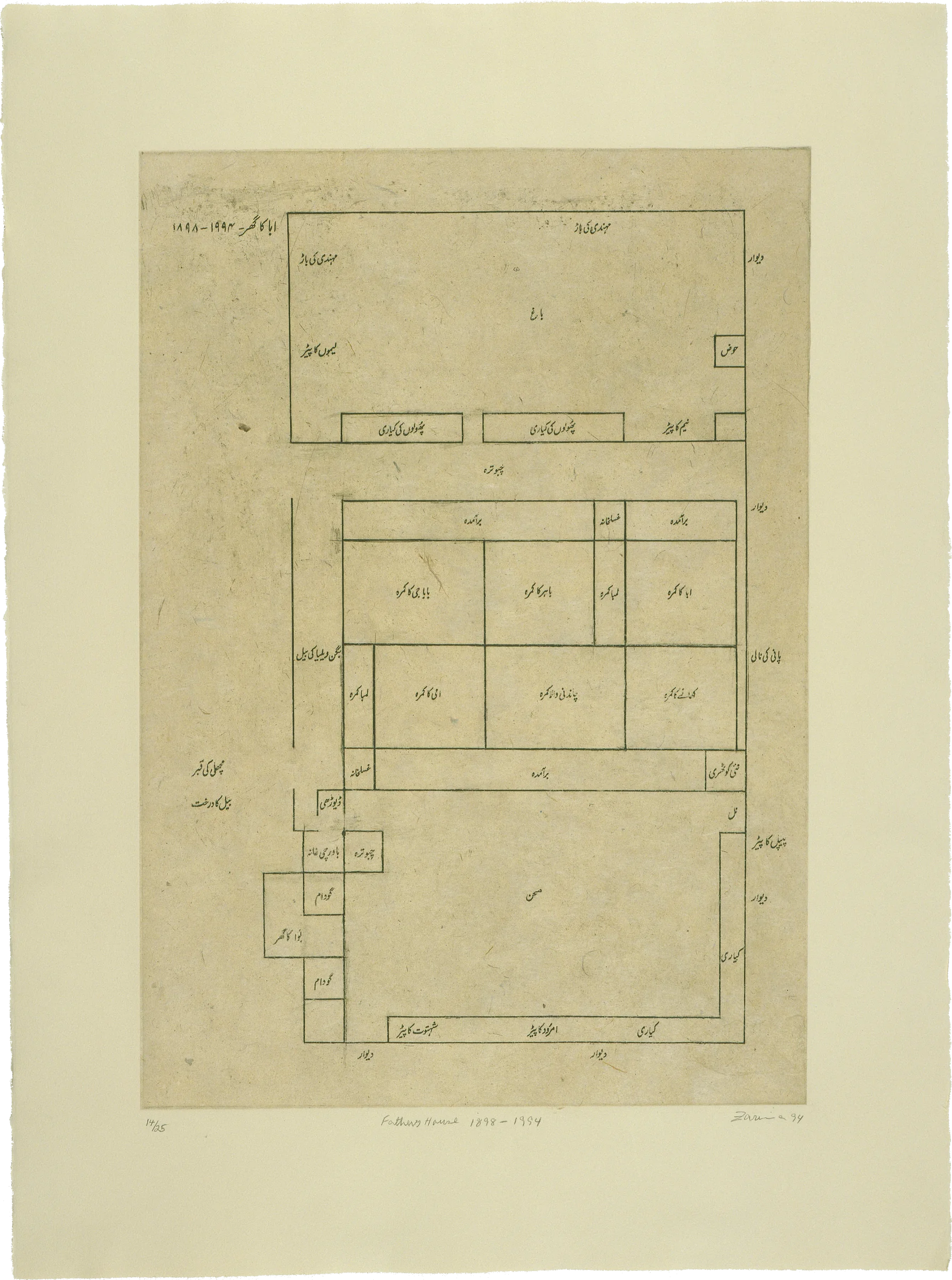
Zarina’s idea of home begins with the faculty house at Aligarh Muslim University, but the work does not treat that building as a picturesque childhood setting. The courtyard, doors, verandas, garden, books, and gendered arrangements of its rooms became a system for understanding space. Her training in mathematics strengthened that attention to proportion and interval, while the architecture she encountered in Delhi, Agra, Fatehpur Sikri, and Lahore offered another education in courtyards, screens, balance, and emptiness.
A floor plan can therefore operate as biography without illustrating a scene. It records routes through a house, permissions and prohibitions, public and private zones, and the repeated movements through which a place becomes intimate. When Zarina reduces a room or threshold to a few carved lines, the apparent austerity is not an absence of feeling. It is a way of giving memory an exact structure.
02Exile
Belonging after return becomes impossible
Home changes meaning across Zarina’s work because it is repeatedly separated from ownership and permanence. After leaving Aligarh in 1958, she lived across Asia, Europe, and the United States. The family dispersed, the childhood house ceased to be available as a destination, and New York—where she lived for decades—remained, in her own account, “someone else’s home.” Home becomes less a stable address than an inner orientation shaped by distance.
This is why houses in the later work can fold, fracture, travel on wheels, cast shadows, or contract into small geometric signs. They are not designs for ideal dwellings. They test what can still be carried when property, nation, and return can no longer secure belonging. The recurring house is at once shelter, wound, memory device, and measure of what migration has altered.
03Close reading
Thirty-six words and images, read as a poem
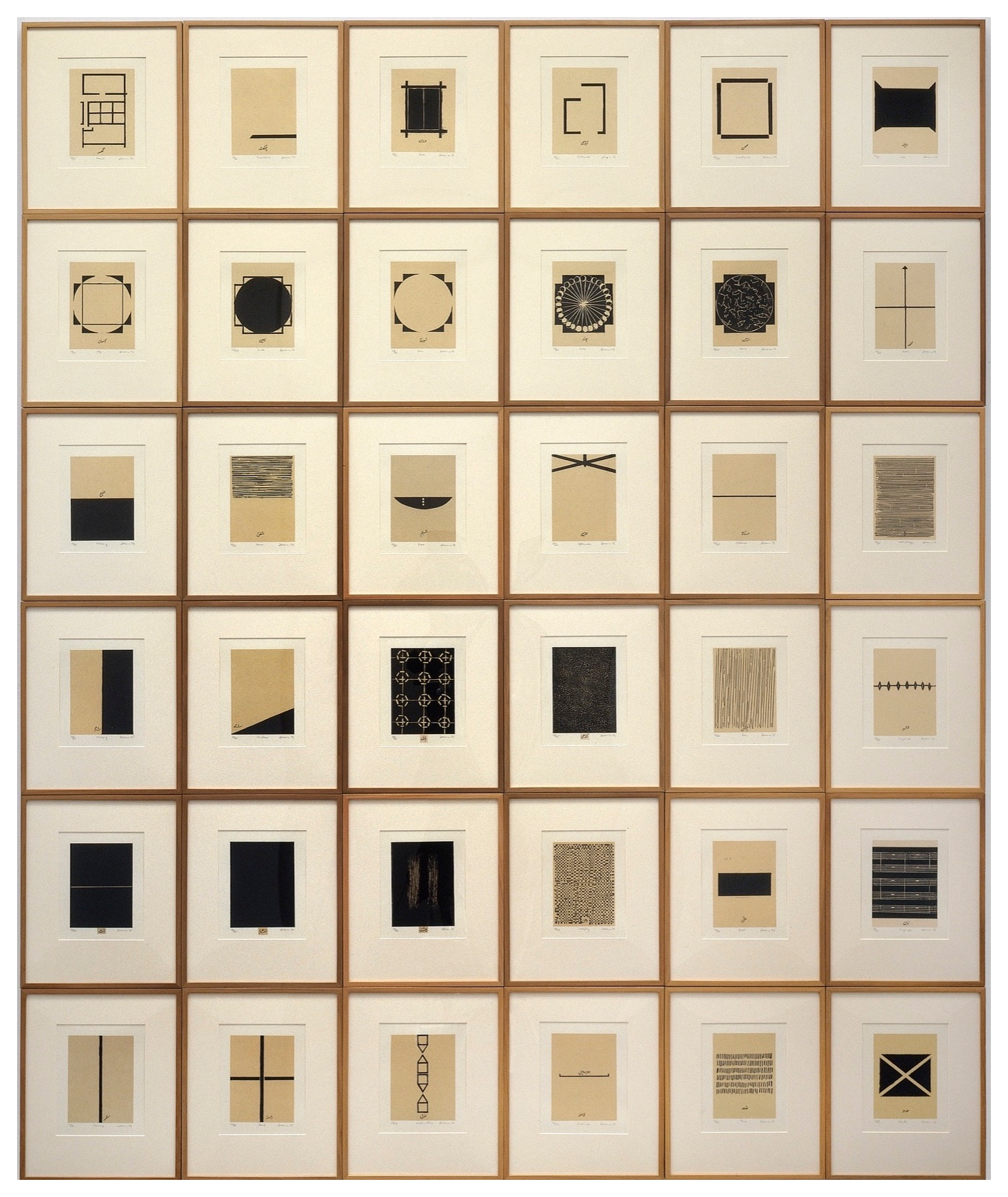
Home is a Foreign Place unfolds in six rows, moving from Home, Threshold, Door, and Entrance toward Journey, Road, Destination, Distance, Time, and Border. The sequence begins inside an architecture and gradually opens into weather, motion, separation, and language. It is not a catalogue of remembered objects so much as a syntax: one image changes the emotional charge of the next.
The Urdu words are essential to that syntax. Zarina described them as triggers for memory whose cultural weight could exceed the image. Chaukhat, or threshold, does not merely name a strip beneath a doorway; it carries the etiquette of waiting before entering a private space. For a reader of Urdu, sound, script, and association activate the prints. For another viewer, the word remains visually present but partly withheld. Home is built from both recognition and distance.
04Material
Paper as wall, skin, and vulnerable shelter
Paper is not a neutral support in this work. Handmade sheets retain fibers, deckled edges, pressure, and small variations; cut and folded paper can behave like a wall while still announcing its fragility. A print records contact between block, ink, paper, and force. The material can hold an architectural image while remaining thin enough to crease, tear, pierce, or travel.
That tension lets Zarina join abstraction to lived experience. A square may evoke a room, a black field may become enclosure, and an opening may register as door, absence, or light. Meaning does not depend on descriptive detail. It accumulates through the physical facts of the sheet and through the viewer’s own bodily understanding of edges, interiors, weight, and shelter.
05Sculpture
A house that moves, folds, or refuses shelter
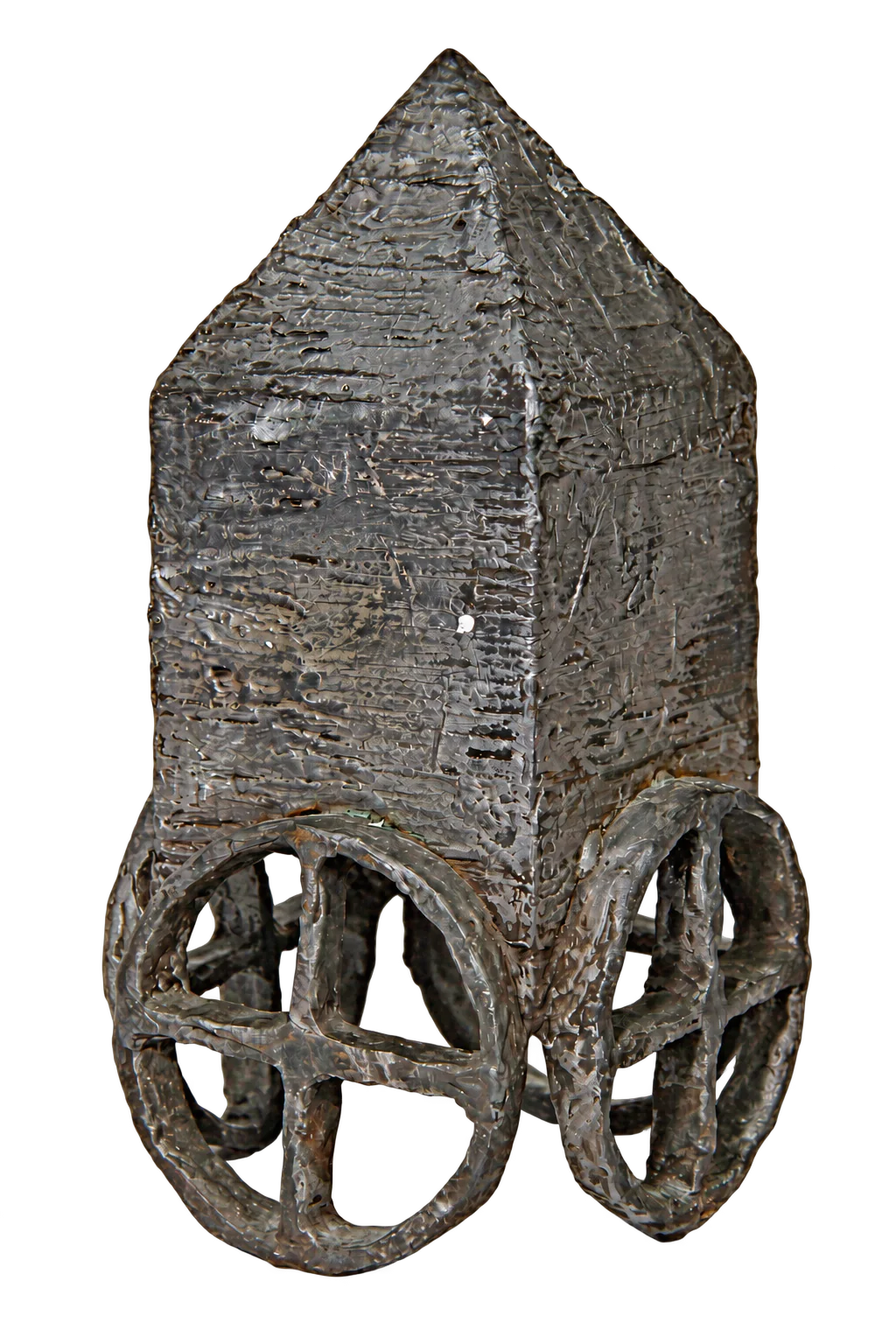
Zarina repeatedly carried the house off the flat sheet. In House on Wheels, the familiar peaked outline is cast in aluminium and given the means of departure. The wheels do not make migration effortless: they make instability permanent. In the larger 1991 work, more than eighty small houses can gather like a settlement or disperse like people in transit, so that repetition holds community and separation at once.
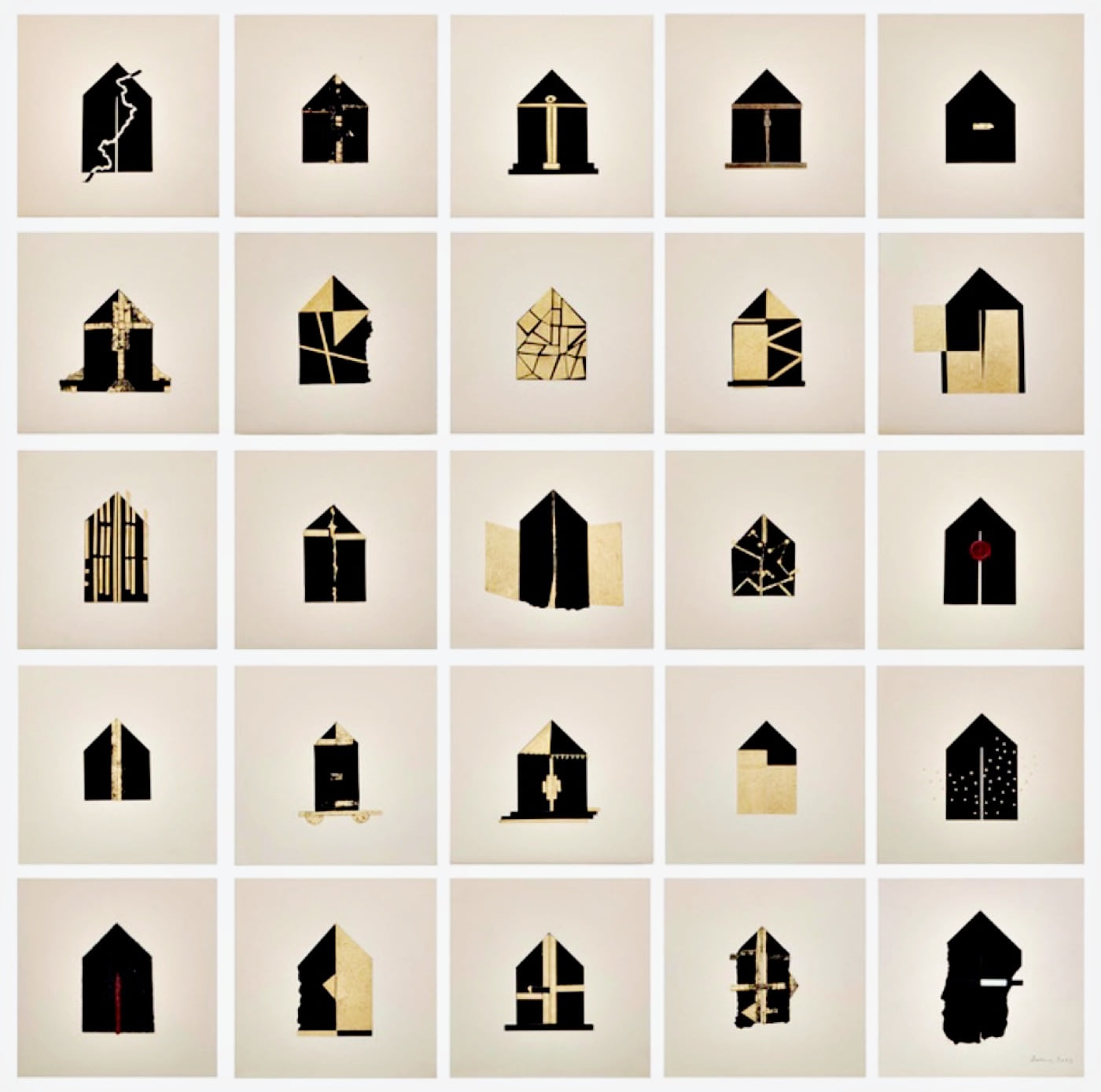
Folding House approaches architecture through collage. Twenty-five variations occupy a five-by-five field, each changing how black paper, printed Kozo paper, gold leaf, edge, opening, and enclosure meet. No single image becomes the definitive house. The grid instead treats home as a form continually remade by memory, material, and circumstance.
06Cities
The rooms made after Aligarh
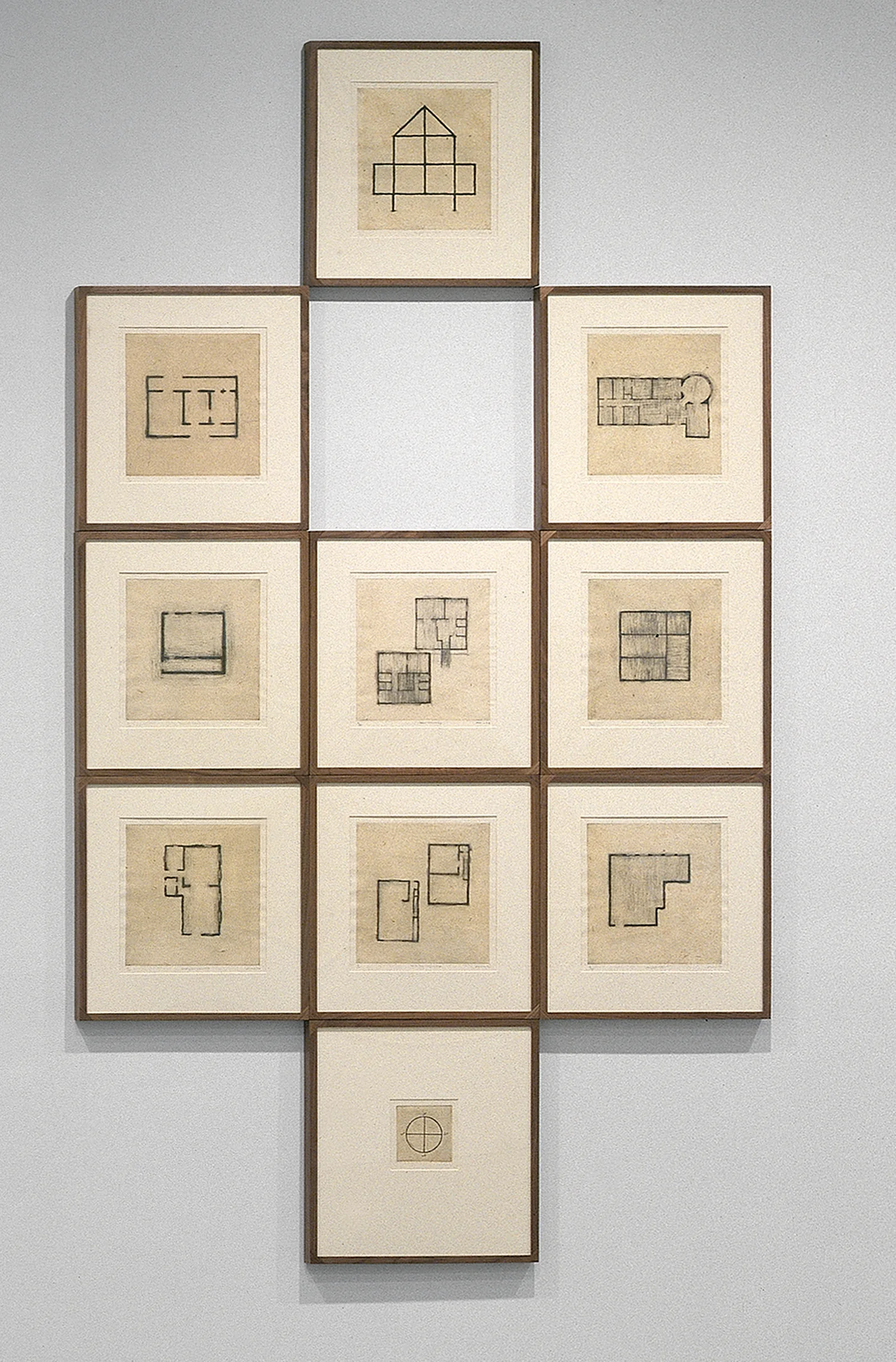
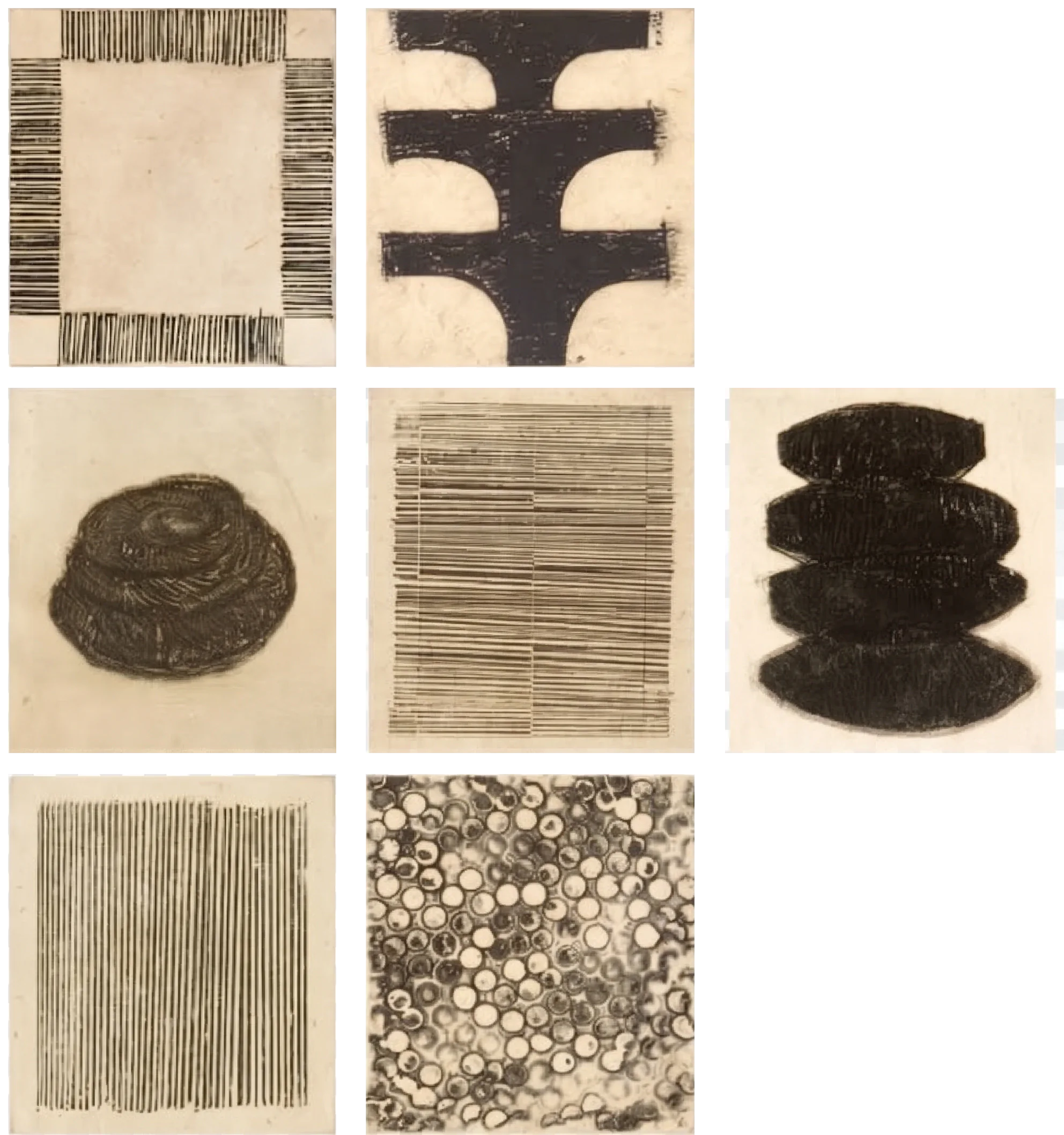
Homes I Made / A Life in Nine Lines traces nine places through spare etchings: Aligarh, Bangkok, New Delhi, Paris, Bonn, Tokyo, Los Angeles, Santa Cruz, and New York. The sequence does not rank an original home above the places that followed. Each city becomes one line in a life whose continuity is made through movement rather than residence in a single country.
The portfolio changes the question from “Where was home?” to “How was home made?” A room, studio, temporary address, remembered plan, or working community can all enter the answer. Read beside the threatened loss of Zarina’s New York loft in the late 1990s, the nine lines reveal home as an ongoing practice: provisional, deliberate, and never guaranteed by ownership alone.