Space to live and work
A place of her own
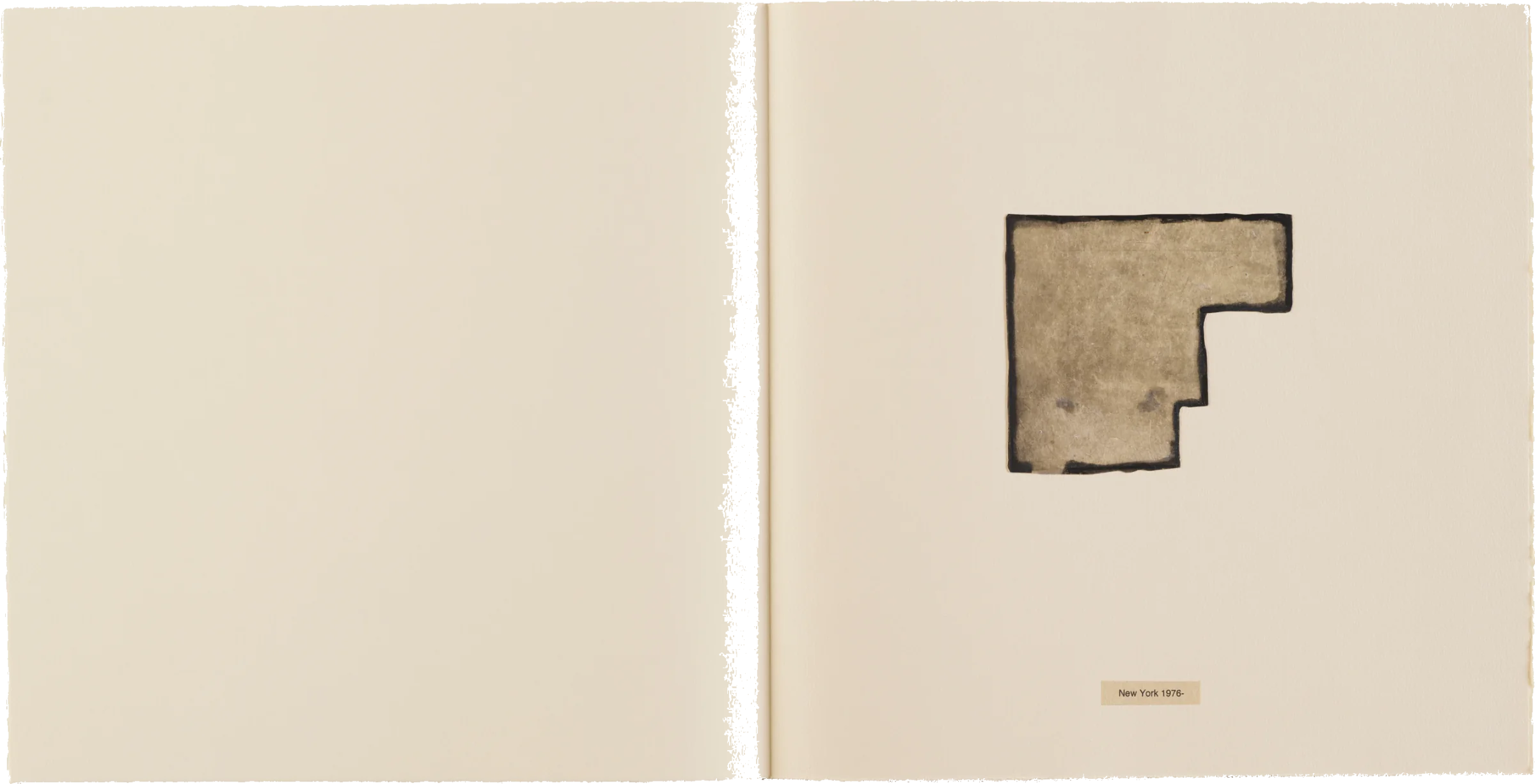
Zarina first established her New York loft in 1976 and lived and worked there across more than four decades, returning permanently after her teaching years in Santa Cruz. The same space held daily life, printing, paper, correspondence, books, and the physical labor of the studio.
On Krishna Reddy’s advice, she went to Bob Blackburn’s Printmaking Workshop and found a community of printmakers. She also taught at Parsons. After Saad died in 1977, she returned to India to settle their affairs, then chose to return to New York and continue working there. During a difficult period she made pin drawings by repeatedly piercing paper.
A wider community
Art, politics, and new awareness
Zarina taught papermaking at the New York Feminist Art Institute and served on the guest editorial collective for the 1979 Heresies issue Third World Women: The Politics of Being Other. In 1980 she co-curated Dialectics of Isolation at A.I.R. Gallery with Ana Mendieta and Kazuko Miyamoto. This was a guest editorial role, not membership in the main Heresies collective.
At Dieu Donné in 1981 she developed cast-paper sculptures using pigments and materials including terra rosa, burnt umber, raw sienna, graphite, and charcoal. Her New York work also returned to maps, floor plans, and the line of Partition.
A threatened home
The loft and the question of home
In 1998 Zarina contested an attempt to evict her from the New York loft that was both her home and studio. She kept the space. She later said the threat made her think about how impermanent homes can be. Around this time she developed Home is a Foreign Place, a portfolio also shaped by years of moving among Santa Cruz, New York, and Karachi.
She became a United States citizen in 1993 while continuing to identify strongly with India. In 2011 she participated in India’s first official national pavilion at the Venice Biennale. These public milestones did not settle the question of where she belonged.
The remembered house
Home as other people
Later in life, the permanence of the loft did not erase her longing for Aligarh. She described dreams in which she returned to the courtyard and found the family gathered there, only to wake and remember that the people and house she sought were gone.
Home was therefore never only bricks and walls. It was made through the presence of other people—and could become foreign again through loss, distance, or time.
Works made in New York
A private language made public
The New York studio joined intimate memory to political geography. The physical acts of the early Pin Drawings stood alongside later portfolios including Home is a Foreign Place, Atlas of My World, These Cities Blotted into the Wilderness, and Letters from Home. Across them, a room, a map, an Urdu word, or a line cut into paper could move between autobiography and shared histories of displacement.
Recognition widened without making the work less personal. Zarina represented India in its first official pavilion at the 2011 Venice Biennale, and her first retrospective, Paper Like Skin, opened at the Hammer Museum in 2012 before travelling to the Guggenheim Museum and the Art Institute of Chicago in 2013. The long New York chapter had become visible as a practice shaped across many places.